.png?width=1452&height=474&name=Greenspace%20Logo%20copy%20(1).png)
2026 Conservation Plan
Year 1, 2026
– Assessment, Invasives, Design, Education, and Building Volunteer Base
Action Goal 1: Baseline, education, set trajectory and overall design
Strategy
- Baseline assessments:
- Stream Habitat Assessment
- Upstream at beginning of property
- Midpoint at Lafayette Crossing
- Special note on canopy cover
- Water Quality Testing
- Upstream at beginning of property
- Downstream at end of property
- Stream Habitat Assessment
- Streambank erosion mapping
- Invasive species inventory
- Develop key steward knowledge
- Begin certifications
- Team support
- Build conservation plan, overall design and timeline
Action Goal 2: Invasive Control
Strategy
- Begin invasive removal (spring 2026):
- Bush honeysuckle, Tree of Heaven, Wintercreeper, Bradford pear
- Other herbaceous invasive species: poison hemlock, garlic mustard (pull and bag both)87u
Action Goal 3: Riparian restoration; slow/prevent erosion, reconnect vegetation to water
Strategy
- Install natives that will shade the upstream portion, about 100 ft.
- Fast growing natives like Elderberry
- Streambank stabilization:
- Live staking (willow, dogwood, elderberry)
Action Goal 4: Install native plants
Strategy
- Create designated stream access zones
- Install native trees and shrubs along Big Elm Tributary where honeysuckle & invasives removed
- Consider some key placements along the meander‑core wetland to offset removal of honeysuckle screen along back fences of homes
Action Goal 5: Pollinator Garden, Native Meadows, Cut Flower Garden
Strategy
- Identify areas and mark
- Herbicide x min 2, ideal 4 - OR - solariation Spring through Fall.
- Border with Arborist Chips
Action Goal 6: Soil Regeneration Testing
Strategy
- Can coincide with pollinator and meadow establishment
- Identify areas and mark: one for regeneration vs standard grass that is mown
- Baseline soil samples and testing; Mark permanent sampling points
- Map site (sun, drainage, rock density)
- Signage and documentation
Action Goal 7: Build & Educate Volunteer base
Strategy
- Community engagement:
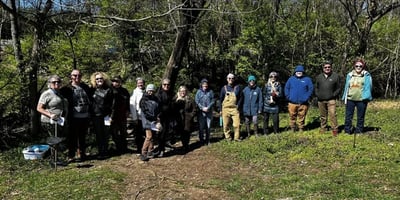
- 4 Educational Events /site walks
- Stream Habitat Assessment – RUSS, March 28
- How to use iNaturalist / How to work on your own schedule - BEVERLY
- How to identify invasives / How to work on your own schedule
- Creating spaces - RUSS/TRICIA
- Natural Play Areas - RUSS/TRICIA
- How to remove winter creeper – JERRY W
- 4 Educational Events /site walks
- Recruit, build contact list, develop partner groups
- Signage
- Establish recurring volunteer workday schedule
- March– November; 2nd and 4th Saturday mornings 10 - 12 (except July and August due to heat)
- Invasive removal, Trash removal, Native planting
Action Goal 8: Maintenance & Stewardship Strategy
Strategy
- Invasive checks: 2× per year
- Tree care: Mulching, watering first 2–3 years
- Stream access points only—no general bank trampling
- Meadow mowing (if applicable): 1× annually (late winter)
- Volunteer stewardship days to build long‑term success
Action Goal 9: Secure funding
Strategy
- Always reapply for Lexington Stormwater Quality Grant (2027 - May 1, 2026 deadline)
- Document list of potential grant sources and deadlines
-
- Lexington Stormwater Quality Grant (Priority)
- NRCS (eligible only for EQIP) – applied 2026
- CAIP (eligible due to farm #) – applied March 2026
- FCCD educational grant
✅ Administrative Deliverables:
-
Site plan
-
Priority restoration map
-
Volunteer plan
-
Grant applications
-
Events