.png?width=1452&height=474&name=Greenspace%20Logo%20copy%20(1).png)
Invasive Species
What are Invasive Species?
They are animals or plants from another region of the world that don't belong in their new environment.
-
They are able to adapt quickly to the new environment
-
They typically reproduce quickly when compared to the native species in the area
-
They harm the property, the economy, or native organisms in their introduced habitat
- from, Emerging Pests in KY by Jonathan L .Larson -
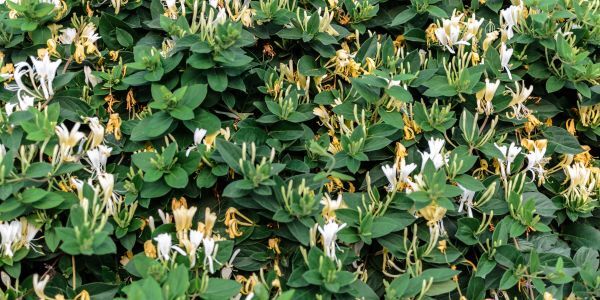
Honeysuckle
Tree of Heaven
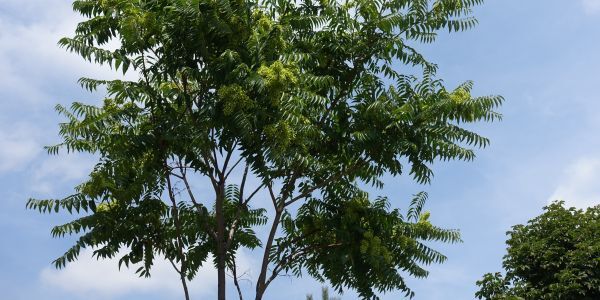
This tree is a highly invasive species originally from Asia. The tree of heaven poisons the soil around it, choking out local plant life. Fast growing and can reach 25 feet in height in a single year! They create a networked root system and spreads through roots and through seeds produced on the female tree. They are also the favorite home to the invasive spotted lanternfly (see below) that has officially arrived in Fayette County.
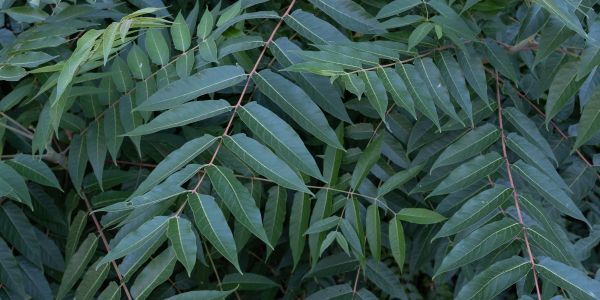
They look a lot like SUMAC, which is a native plant we have in our greenspace - two easy ways to tell them apart...
1. Sumac leaves are serrated and TOH leaf edges are smooth with a little lobe on either side of the bottom of the leaf, which has a bump on the tip of the lobe.
2. TOH smells bad! Often just getting close to the leaves is enough - but bend a little branch and take a sniff.
Our Management Plan
Small new growth - pull it, pull it and pull it.
Larger trees - Ellen Crocker told us how the "Hack & Squirt" method works and why it's preferred. In the fall, hack the bark and tree, then spray with herbicide. The herbicide is pulled down into the root system, which is often connected to the surrounding Trees of Heaven. This kills the tree slowly over about a year. Then you are left with a dead tree, that if tall, will need to be removed for safety reasons. Although it will eventually need to be removed, this method is more successful at killing the network of roots.
Some prefer to drill holes near the base and spray in the herbicide.
If there are too many to remove at once, prioritize removing female trees to slows down the spread.
We will consider cutting the dead tree to 15-20 ft to use for wildlife habitat.
Spotted Lanternfly
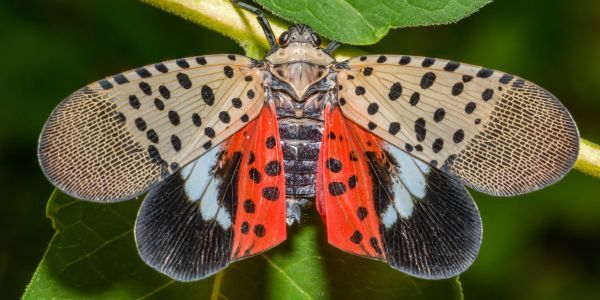
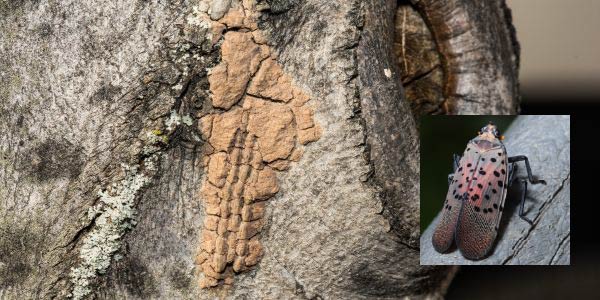
This invasive insect has been spotted in Fayette Co January 2026. The spotted lanternfly from East Asia came to the US in 2014 and threatens ecosystems and agriculture, particularly grape vines, apples, hops and Christmas trees. This species is drawn to the Tree of Heaven, but feed on native plants and trees - sometimes killing them in the process! And their honeydew fecal secretions create a sticky mess and mold growth!
Ellen Crocker looked for the young lanternflies while visiting. She told us they are more likely seen hopping around on the tree rather than flying. They suck the sap and their sugar filled excretions coat the tree. The sugary coating on the tree grows mold and give the bark a black appearance.
Winter Creeper
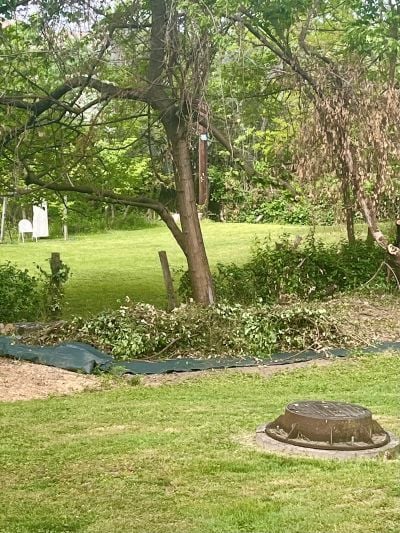
April 2026, we had a demo from Jerry Weisenfluh, the Key Steward for the Preston Springs greenway.
View the under the Invasive Species page - scroll to Winter Creeper.
- Begin with a potato rake to extract approximately 75–80% of the tangled vines, loosening the dense mat at the soil surface.
- Follow up with a push–pull cutting tool run just beneath the soil to sever remaining roots.
- Use a handheld pickaxe to remove deeper, more established roots that would otherwise resprout.
The first video shows the tools and methods. The second video talks about chemical management.
Read our blog, Winter Creeper is Taking Over!

Garlic Mustard
Like many invasive species, garlic mustard requires patience and persistence to get rid of. It grows early in the Spring, so that's when we get out, pull and bag!
Garlic mustard, originally from Europe and Asia, has become a very troublesome invasive plant across the Northeast, Midwest and Northwest of the United States. During its first year, garlic mustard leaves are rounder and take on a rosette formation at ground level. In their second year, the leaves grow up a flowering stem and become more triangular and heart-shaped with toothed edges. Small white four-petaled flowers emerge in the spring.
Chinese Yam
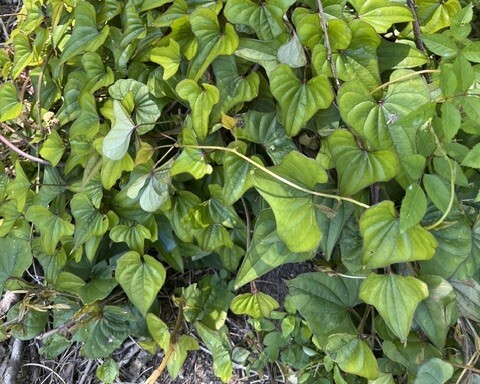
Chinese yam (Dioscorea oppositifolia, syn. D. batatas) is also known as cinnamon vine or air potato. It was brought from China to North America in the 1800s for food, ornamental, and medicinal uses. It escaped cultivation by the mid-1980s and is now found throughout the eastern and central United States, including a number of counties in southern Missouri. It continues to be sold as an ornamental plant, but its use should be strongly discouraged.
There is a large growth of Chinese Yam just behind 396 Bob O Link that is identified with an informational sign.
Poison Hemlock
Poison hemlock (Conium maculatum) is an invasive plant native to Europe and North Africa.
It is highly toxic and can be fatal to humans and livestock.
Poison hemlock requires considerable sunlight to flourish and is often found near railways, rivers, ditches, field edges, farms and bike paths. It is a biennial plant (having a two-year life cycle), and is unlikely to grow in very shady areas or places that are frequently mowed.
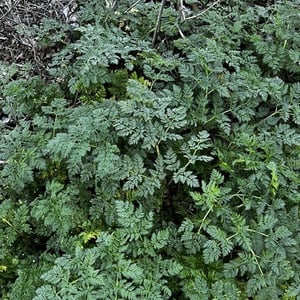
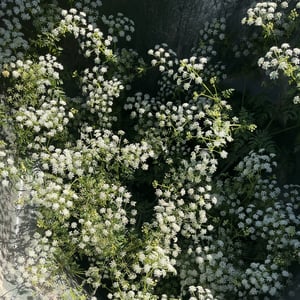
We have a considerable amount of poison hemlock in the area behind our gathering place (table area). Its leaves look like carrot tops and blossoms similar to Queen Anne's Lace, but the stem is waxy and mottled purple.
July 2026, Jennifer and Carolyn removed 2 Herbies full. Check out our adventures in the Chronicle of Activities
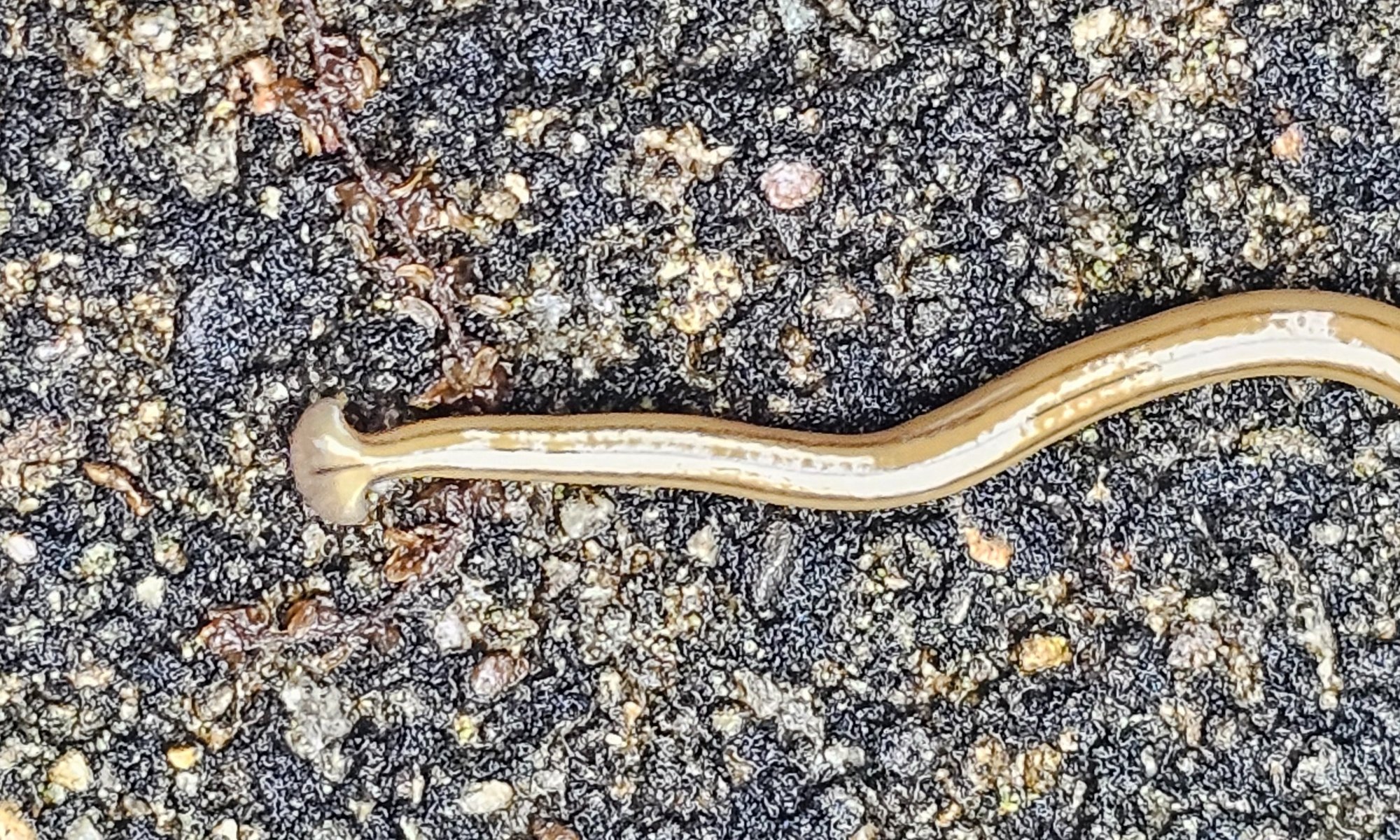
Hammer Head Flatworm
Hammerhead worms are terrestrial land planarians, sometimes called shovel-headed garden worms. These flatworms have spread widely around the world from Asia, most likely through potted plants — and are now found in multiple counties across Kentucky, including Fayette.
Read all about them in our blog, Lexington’s Invasive, Toxic Flatworm — What You Need to Know
| Common Name | Scientific Name |
| Autumn Olive | Elaeagnus umbellata |
| Bradford Pears or Callery Pear | Pyrus calleryana |
| Bush/Shrub Honeysuckle | Lonicera maackii, L. morrowi, L. tatarica |
| Chickweed | Stellaria media |
| Chinese Silver Grass | Miscanthus sinensis |
| Chinese Yam | Dioscorea oppositifolia |
| Common Reed/Phragmites | Phragmites australis |
| Crown Vetch | Coronilla varia |
| Garlic Mustard | Alliaria petiolata |
| Giant Ragweed | Ambrosia trifida |
| Japanese Honeysuckle | Lonicera japonica |
| Japanese Knotweed | Polygonum cuspidatum |
| Japanese Stiltgrass | Microstegium vimineum |
| Johnson Grass | Sorghum halapense |
| Kudzu | Pueraria lobata |
| Multiflora Rose | Rosa multiflora |
| Musk Thistle | Carduus nutans |
| Oriental Bittersweet | Celastrus orbiculata |
| Poison Hemlock | Conium maculatum |
| Privet | Ligustrum sinense, L. vulgare |
| Purple Loosestrife | Lythrum salicaria |
| Queen Anne’s Lace | Daucus carota |
| Sericea lespedeza _Chinese Bushclover | Lespedeza cuneata |
| Winged Euonymus, Burning Bush | Euonymus alatus |