2029 Conservation Plan
Year 4, 2029
FOCUS – Meadows, Pollinators, and Community Integration
Action Goal 02: Conservation, Maintenance & Stewardship Strategy
Strategy
- Invasive checks: 2× per year
- Invasive removal
- Manage aggressive natives (Sumac and Black Locust) by thinning and perimeter mowing
- Meadow mowing (if applicable): 1× annually (late winter)
- Tree care: Mulching, watering first 2–3 years
- Stream access points only—no general bank trampling
- Expand Monarch Milkweed (Monarch Watch Free Milkweed application, Oct 2028)
Action Goal 03: Build & Educate Volunteer Base
Strategy
- Community engagement:
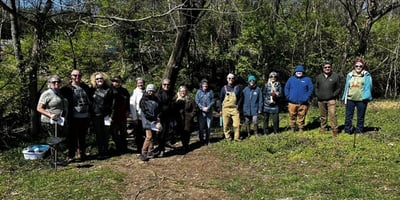
- 4 Educational Events / Site walks
- The Greenspace in Winter
- The Greenspace in Spring
- The Greenspace in Summer
- The Greenspace in Fall
- Nurture contact list – newsletter, social events
- Signage
- “You found” plant species info sheets for each identified native plant
- Invasive species fact sheet and stewardship action info
- More permanent signage to be determined
- Volunteer stewardship days to build long‑term success
Action Goal 04: Secure Funding
Strategy
- Always reapply for Lexington Stormwater Quality Grant
- Document list of potential grant sources and deadlines
- NRCS (eligible only for EQIP)
- CAIP (eligible due to farm #)
- FCCD educational grant
- Youth Project - https://wildones.org/seeds-for-education/sfe-application/ - Opens July 15 – Nov 15
Action Goal 08: Soil Regeneration Implementation
Apply Regenerative Practices (Year 3)
Strategy – shift dominance to native system (full native mix)
- Mow in late spring
- 50% Grasses → build soil carbon + structure; Little Bluestem (Schizachyrium scoparium), Big Bluestem (Andropogon gerardii), Indiangrass (Sorghastrum nutans), Switchgrass (Panicum virgatum)
- 35% Forbs (wildflowers) → support biodiversity + microbes; Black-eyed Susan (Rudbeckia hirta), Purple Coneflower (Echinacea purpurea), Bee Balm / Bergamot (Monarda fistulosa), Blazing Star (Liatris sp.), Goldenrod (Solidago sp.), Asters (Symphyotrichum sp.), Milkweeds (Asclepias spp.), Joe-Pye Weed (Eutrochium spp.)
- 15% Legumes → fix nitrogen; Partridge Pea (Chamaecrista fasciculata), Red Clover (Trifolium pratense), White Clover (Trifolium repens), Yellow Sweet Clover (Melilotus officinalis)
- Deep taproots → break compaction + pull up nutrients; Sunflower (Helianthus spp.), Alfalfa (Medicago sativa)
- Track: % plant cover, number of species, soil feel (crumbly vs compacted), earthworms / insects
Action Goal 13: Evaluate Work
Strategy
Document:
- Native plant survival
- Bank quality
- Water Quality
- Bat count (citizen science encouraged) – and perhaps other counts
- Pollinator garden / bee count
- Monarch Milkweed / caterpillar count / Monarch count
- Meander-core wetlands
- Monitor spread of aggressive natives – ex Sumac and Black Locust
Action Goal 14: Balance Ecology And People
Strategy
- Establish soft walking loops
- Place educational signage
✅ Administrative Deliverables:
Visible transformation; Increased neighborhood use