.png?width=1452&height=474&name=Greenspace%20Logo%20copy%20(1).png)
I learned about a new creature this week at the LFUCG Environmental Commission’s community event committee meeting. Patrick, the committee chair, told us about this crazy worm he has all over his yard! If you’ve seen a long, slimy worm with a broad, shovel- or hammer-shaped head in your garden or yard, you may have encountered one of nature’s stranger invasive species: the hammerhead worm (subfamily Bipaliinae; genera Bipalium and Diversibipalium). These unusual flatworms are not native to Kentucky and can pose ecological and minor health concerns if mishandled.
 What Are Hammerhead Worms?
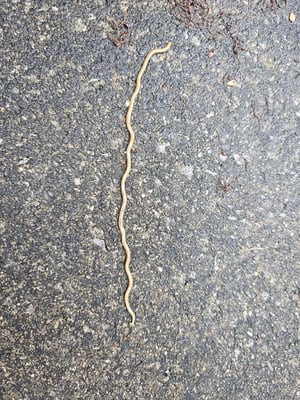
Hammerhead worms are terrestrial land planarians, sometimes called shovel-headed garden worms. They belong to the genus Bipalium and are native to Southeast Asia. These flatworms have spread widely around the world, including across the United States, most likely through potted plants — and in multiple counties across Kentucky, including Fayette.
Visually, they can range from 8–12 inches long and are typically narrow, smooth, and colored from light honey to dark brown, often with stripes down their backs. Their most distinctive feature is a wide, flattened “hammerhead” shape at the front of their body.
Why Be Concerned
 They Kill Earthworms
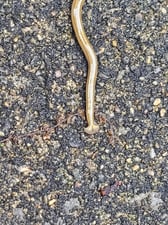
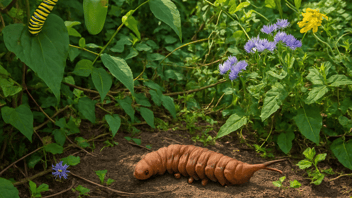
While they won’t bite or chase you, hammerhead worms are predatory flatworms that feed on earthworms, slugs, snails, and other soil invertebrates. Earthworms are critical for healthy soil — aerating, mixing organic material, and improving nutrient cycling — so heavy predation by flatworms can disrupt soil health and local ecosystems.
They Produce Neurotoxin
– DO NOT TOUCH OR EAT
These worms also produce neurotoxin-like chemicals (like tetrodotoxin found in the pufferfish) to subdue prey. There is no antidote for this toxin, but luckily the risk of injury is low. Handling them with bare hands can cause mild skin irritation, and they are not safe to eat. Though not aggressive or dangerous in the way venomous animals are, their secretions are designed to deter predators and subdue worms — so it’s best to avoid skin contact altogether.
They Reproduce through Fragmentation
– DO NOT CUT
Another important biological trait: hammerhead worms can reproduce through fragmentation. If the worm is cut or broken, each piece can regrow into a full worm. This means that improper disposal (like smashing or cutting it) can unintentionally increase their numbers. Luckily, unlike tropical regions, our cooler weather and their larger bodies do make regeneration more difficult than most flat worms (planarians). This is a cool – or creepy video about the worm and it’s regenerative ability - Hammer Head Worm Video
Where They’re Found in Kentucky
Extension specialists at the University of Kentucky have confirmed hammerhead worm sightings in Fayette County (Lexington) and other parts of the state. Sightings tend to spike in warm, damp conditions — especially following rain, when the worms are more likely to be out in the open rather than under logs or stones. Look for them on the concrete and pavement early in the morning (when it is dewy) and after it rains. Like how we find earthworms after rains – so will these predators.
How to Manage and Remove Them Safely
Hammerhead worms won’t usually require aggressive control, but if you spot one and want to keep it from reproducing or disrupting your garden, here’s what experts recommend:
1. Never Cut or Smash the Worm
Because of their ability to regenerate from pieces, chopping or smashing them can create multiple new worms.
2. Use Salt or Vinegar
Applying table salt directly to the worm will kill it. Alternatively, a solution of vinegar or citrus (like orange extract) applied directly to the flatworm is also effective.
3. Bag and Seal for Disposal
For safer handling:
- Use gloves or tweezers to pick up the worm without bare skin contact.
- Place it into a seal-able plastic bag.
- Add salt or a bit of vinegar inside to ensure it cannot survive.
- Seal the bag and put it in the trash.
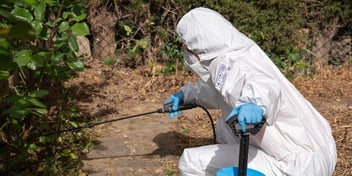
4. Wear Protection
If you must handle one before disposal, always wear gloves, and wash hands and tools thoroughly afterward.
Should You Report Sightings?
Although these predatory worms are a concern for homeowners and gardeners, they are not considered a threat in Fayette County. If you like, you can help keep track of these worms and email photos with location to reportapest@uky.edu.
In Summary
Understanding and managing hammerhead worms helps protect the beneficial organisms in your soil and limits the spread of this unusual invasive species.
- Hammerhead worms are invasive flatworms.
- They feed on earthworms, which can harm soil health and ecosystems.
- These worms produce toxic secretions and shouldn’t be touched with bare hands.
- Do not cut or smash them — remove whole and use salt or vinegar inside a sealed bag instead.
.png?width=352&name=symbolic%20monarch%20migration%20(1).png)