.png?width=1452&height=474&name=Greenspace%20Logo%20copy%20(1).png)
Winter creeper (Euonymus fortunei) is a fast‑growing evergreen vine that was introduced to the United States as an ornamental groundcover. Once valued for its hardiness and year‑round greenery, winter creeper has escaped cultivation and is now considered a serious invasive plant.
I bet everyone reading this has a good amount in their yard. In my front yard, we’ve gone from thick weed-free grass to 90% violets and wintercreeper. Its spread is perhaps more damaging in the riparian zone, where it compromises native vegetation, wildlife habitat, and water quality.
Why is Winter Creeper Invasive?
It thrives in a wide range of conditions—from full sun to deep shade and from dry soil to moderately moist ones. This makes it highly adaptable once introduced into natural areas. Birds and other wildlife eat its fruit and disperse seeds, allowing it to spread far beyond where it was originally planted.
Once established, winter creeper forms dense mats that smother native groundcover and prevent the germination of tree seedlings and wildflowers. When it climbs trees, it adds weight and blocks sunlight, weakening host trees and increasing their susceptibility to wind damage and disease.
Impacts on the Riparian Zone
Riparian zones are the vegetated areas along streams, rivers, and wetlands. Riparian zones are among the most ecologically valuable landscapes. They stabilize stream banks, filter pollutants from runoff, moderate water temperatures, and provide critical habitat for insects, birds, amphibians, and fish.
Winter creeper undermines these functions by displacing native riparian plants that evolved to perform these roles. Dense infestations reduce plant diversity, which in turn disrupts food webs, especially for macroinvertebrates that are key indicators of water quality. Areas heavily infested with invasive plants like winter creeper show lower macroinvertebrate diversity and poorer aquatic habitat overall.
These dense mats of vines behave similarly to impervious surfaces. It increases stormwater runoff rather than absorbing it. This contributes to erosion, sedimentation, and nutrient loading in nearby streams, compounding stress on already vulnerable waterways.
Why Early and Persistent Removal Matters
Winter creeper spreads aggressively and can rebound quickly if removal is incomplete. Even small fragments left behind can resprout, and untreated areas can act as seed sources for downstream sites, especially during storms. This makes coordinated and persistent management especially important in riparian corridors, where water movement accelerates spread.
Reducing winter creeper infestations helps protect not just the immediate site, but the entire watershed downstream.
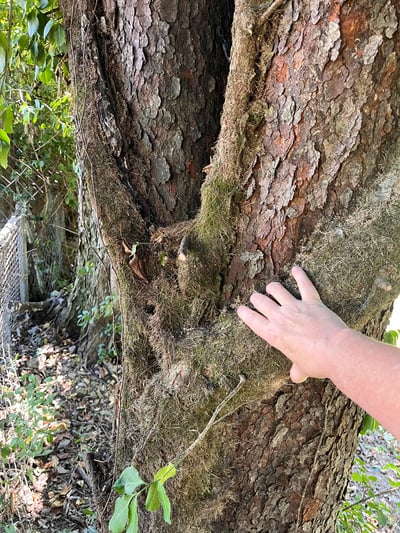
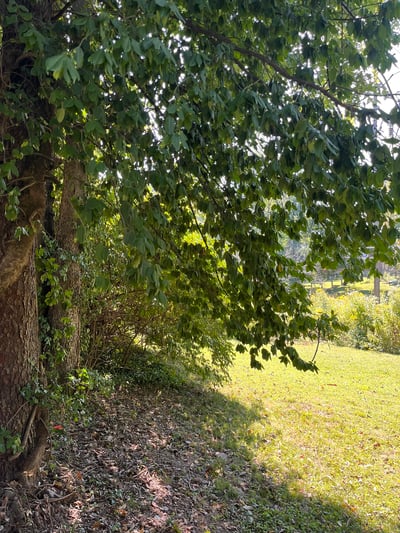
Pictured below is a well-established winter creeper vine that has taken over a tree. It will use the sunlight to produce seeds and block sunlight from the tree. What looks like tree branches and leaves is only winter creeper.
Best Practices for Removing Winter Creeper
Effective winter creeper control usually requires a combination of mechanical and chemical methods, chosen based on infestation size, location, and site sensitivity.
Manual Removal: Effective Techniques and the Right Tools
Manual removal is often the preferred option for small to moderate infestations and for sensitive natural areas. While labor‑intensive, it is much more effective—and far less frustrating—when the proper tools are used.
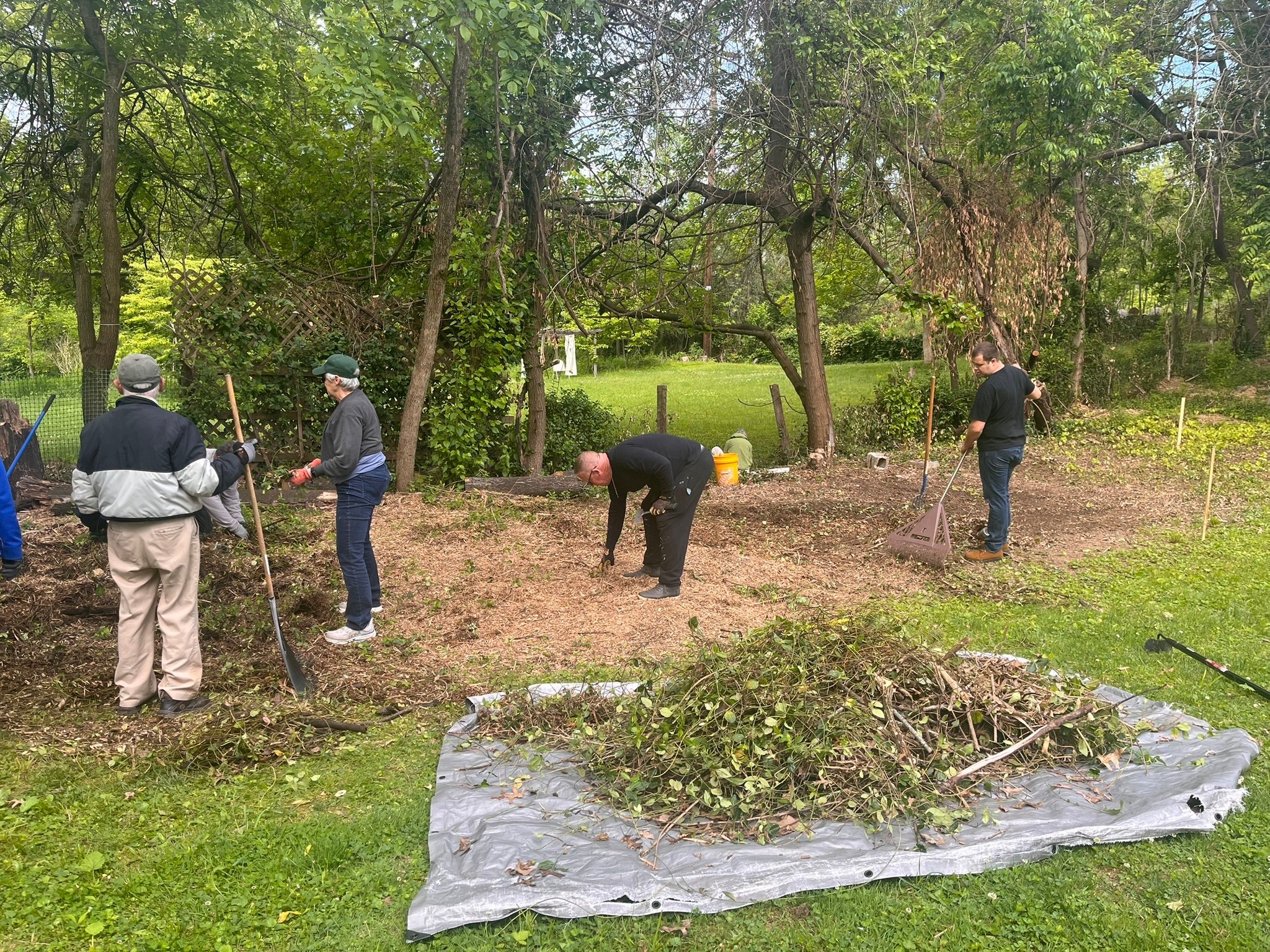
April 2026, we had a demo from Jerry Weisenfluh, the Key Steward for the Preston Springs greenway.
View the under the Invasive Species page - scroll to Winter Creeper.
- Begin with a potato rake to extract approximately 75–80% of the tangled vines, loosening the dense mat at the soil surface.
- Follow up with a push–pull cutting tool run just beneath the soil to sever remaining roots.
- Use a handheld pickaxe to remove deeper, more established roots that would otherwise resprout.
Once the vines are removed, the soil will be exposed. Protect bare soil immediately with mulch to prevent drying, erosion, and the loss of valuable nutrients and beneficial soil microbes. Mulching also helps suppress any remaining root fragments that may attempt to regrow.
Manual removal rarely eliminates winter creeper in a single outing; follow‑up monitoring and repeated effort are essential.
Cutting climbing vines at the base of trees can relieve immediate stress on host trees. The upper vine should be left to die and fall away naturally rather than pulled, which could damage bark or limbs.
Herbicide Use for Large or Dense Infestations
For large or established infestations, herbicides are often necessary. The Missouri Department of Conservation recommends cut‑stump or cut‑vine treatments using glyphosate or triclopyr, applied directly to freshly cut stems. This targeted approach minimizes harm to nearby native plants. This is the same herbicide used in our greenspace to treat the stumps of honeysuckle and tree of heaven.
Foliar herbicide applications can also be effective on groundcover infestations, particularly after the first frost when many native plants are dormant, but winter creeper remains green. This timing reduces non‑target impacts while improving effectiveness.
A few things to keep in mind:
- Before applying herbicide, pull vines away from tree trunks to reduce direct contact with bark.
- This step does not fully eliminate exposure, so herbicides should be used cautiously around trees and shrubs.
- Avoid spraying directly over the root zones of desirable or fragile plants.
- Spot treatments or cut‑stem applications are strongly preferred over broadcast spraying to minimize unintended damage.
Always follow label instructions, apply on calm days to avoid drift, and expect that repeat treatments will be necessary, as winter creeper is highly resilient.
Follow‑Up and Restoration
Once the vines are removed, the soil will be exposed. Protect bare soil immediately with mulch to prevent drying, erosion, and the loss of valuable nutrients and beneficial soil microbes. Mulching also helps suppress any remaining root fragments that may attempt to regrow.
No method is one‑and‑done. Sites should be revisited for several seasons to control resprouts and seedlings. After removal, replanting with native species is strongly recommended to stabilize soils, reduce erosion, and prevent reinvasion.
A Call to Action
Winter creeper may look harmless, but its impacts on riparian ecosystems are long‑lasting and far‑reaching. By recognizing it early, removing it thoughtfully, and restoring sites with native vegetation, we can play a vital role in protecting streamside habitats and water quality for the future.
When you need some "zen time", consider sitting in the greenspace pulling up winter creeper. 💚😎

References
https://www.jamesriverbasin.com/river-ramblings/invasive-plants
https://mdc.mo.gov/trees-plants/invasive-plants/wintercreeper-control
https://www.gardeningknowhow.com/ornamental/vines/wintercreeper/wintercreeper-control.htm